
acoust IQ at DAGA 2026
Dresden | March 2026
by Imran Moseley
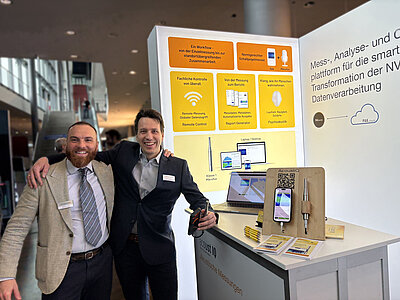
Acoustics, Software and AI – Reflections from DAGA 2026
After attending DAGA 2026 in Dresden, one thing is clear: acoustics is no longer a narrow engineering discipline. It is becoming digital, software-driven and data-centric – and this shift is reshaping how we measure, analyse and manage sound.
DAGA remains one of the most important meeting points for professionals working across acoustics, noise and vibration, bringing together researchers, engineers and industry specialists from academia and applied fields. This year's conference reinforced a direction we at acoust IQ have been working towards since our inception: the convergence of precision measurement, cloud-based data processing and intelligent analysis.
The Breadth of Modern Acoustics
One of the most striking aspects of DAGA is always the breadth of topics covered – from building and room acoustics to vehicle acoustics, electroacoustics, sound design, psychoacoustics and virtual reality sound environments. These fields are increasingly interconnected through simulation, measurement, perception and software platforms.
Acoustics today is relevant to almost every industry and sits at the intersection of physics, engineering, psychology, data science and software. This makes it exceptionally well positioned for the next wave of digital transformation.
The Shift Toward Intelligent Measurement and Data
A clear theme at DAGA 2026 was the growing role of intelligent acoustic measurement, simulation and data analysis. The combination of sensors, software and analytics is changing how we understand and manage sound environments – in buildings, industry, mobility and urban settings.
Historically, acoustic engineering work was often measurement-heavy, manually analysed, specialist-driven and slow to iterate. The direction is now clearly moving toward something different:
- Automated measurement workflows – from data capture to the finished report
- Simulation before physical testing – reducing time and cost
- Cloud-based data platforms – enabling cross-site access and collaboration
- AI-assisted analysis – for faster, more consistent results
- Software-defined acoustic engineering – integrating the entire workflow
This is precisely the transition that acoust IQ was designed to support. Our platform combines a Class 1 measurement system with cloud connectivity and remote measurement capabilities – moving acoustic engineering from isolated, manual processes into a connected, digital workflow.
AI Adoption Across German Engineering
This shift is not happening in isolation. Across German industry – particularly in engineering, automotive and manufacturing – AI and data-driven workflows are becoming central to competitiveness.
Some key trends:
- AI adoption among German firms has grown significantly in recent years, particularly in the manufacturing sector, as studies by the ifo Institute and ZEW show.
- In the automotive sector, over 95 % of car manufacturers are currently investing heavily in AI, particularly in vehicle development and manufacturing optimisation, according to Gartner.
- Major German industrial companies are investing substantial sums in AI applications – spanning engineering, production and logistics.
- In software engineering more broadly, AI-powered tools are rapidly becoming standard, changing how code is written, tested and optimised.
The broader direction is clear: engineering industries in Germany are becoming software-driven, data-driven and AI-assisted – and acoustics will follow the same path.
What This Means for the Acoustics Industry
Putting these trends together, four key developments stand out:
1. Software will become central Acoustic engineering workflows will increasingly move into integrated software environments. At acoust IQ, this is already a reality: our system covers the entire chain from mobile measurement to template-based reporting – without media breaks or manual data transfer.
2. Data will become more valuable than individual measurements Companies will build acoustic databases, simulation models and predictive tools. With acoust IQ pro, measurement data is stored in the cloud and can be shared and analysed across teams and locations.
3. AI will assist analysis and optimisation AI will increasingly support noise source identification, sound quality optimisation, automated reporting, simulation model calibration and anomaly detection. These capabilities will build on structured, cloud-based measurement data – exactly the kind of data that platforms like acoust IQ provide.
4. Speed will become a competitive advantage Faster measurements, faster simulations, faster reporting, faster decisions. With acoust IQ live, measurements can be controlled and monitored remotely in real time – eliminating travel and enabling expert analysis from anywhere in the world.
The Bigger Picture
Acoustics is following the same trajectory that many engineering disciplines have taken over the past two decades:
- Manual engineering
- Computer-aided engineering
- Simulation-driven engineering
- Data-driven engineering
- AI-assisted engineering
We are currently between stages 3 and 4, with a clear movement toward AI-assisted acoustic engineering. acoust IQ was built to accelerate this transition – as the digital infrastructure that connects measurement, data and analysis in a single, scalable platform.
Final Thought
Events like DAGA are a valuable reminder that acoustics is a broader and more important field than many people realise. Sound affects buildings, vehicles, products, cities, workplaces and human wellbeing. In a world that is becoming increasingly urban, digital and software-defined, acoustics will only grow in importance.
The biggest change will not come from new microphones or new materials alone. It will come from software, data and intelligent analysis. And that is where the next chapter of the acoustics industry is being written.
Ready to experience the future of acoustic measurement? Discover acoust IQ → | Follow us on LinkedIn